
DYNAMIC
MOVEMENT
ASSESSMENT
DMA V3 · "Master slow to move fast and powerful"
Before we train you, we screen you. The DMA is a 10-minute, 7-movement assessment that reveals exactly where your body is limiting your performance — and what to do about it.
Warm-up IS the assessment — no wasted time
Core · Mobility · Stability · Coordination
Movement Quality Score — your training baseline
MOVE BETTER FIRST.
EVERYTHING ELSE FOLLOWS.
Most training programs skip the most important step: understanding how you actually move. Without a baseline, coaches are guessing — and guessing leads to injury, plateaus, and wasted time.
The DMA gives Coach Chris a precise map of your movement quality across four categories: Mobility, Core Stability, Stability, and Coordination. Every score tells a story. Every corrective has a purpose.
Your DMA results directly determine your starting program — whether that's corrective work, strength training, or sport-specific conditioning. No guesswork. No cookie-cutter programs.
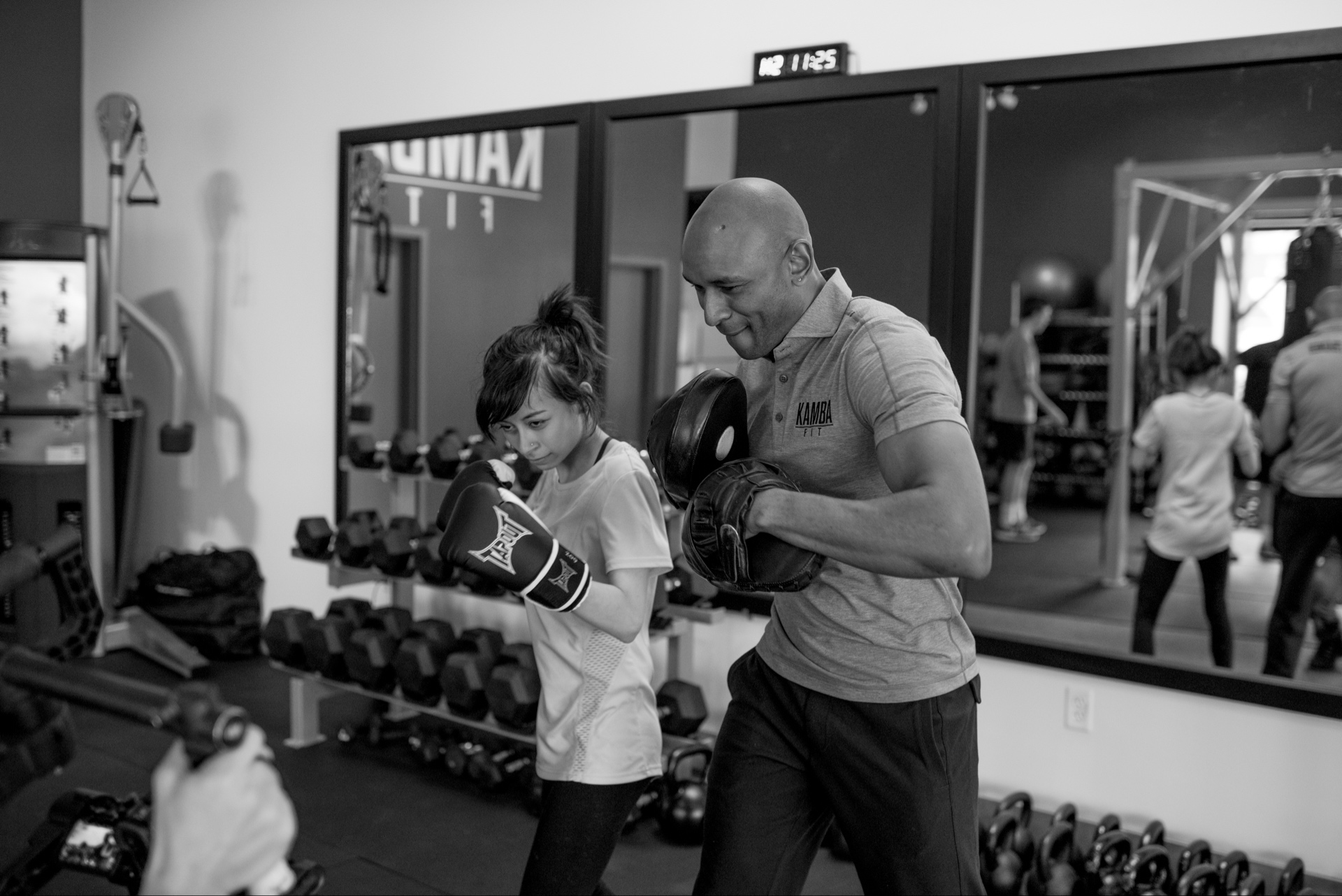
"The warm-up is the assessment. We screen you while you move."
— Coach Chris Wambua
YOUR MOS READINESS SCALE
Train normally
Monitor / minor correctives
Modify training load
Refer out
Scoring: 2 = Full ROM, symmetrical · 1 = Limited or compensated · 0 = Pain — refer out. For bilateral movements, the lowest side is the final score.
7 MOVEMENTS.
COMPLETE PICTURE.
Tall Plank Hold
20–30 sec hold
Core stability is the foundation of every movement. If you can't hold a plank with integrity, every lift and sprint is built on sand.
- Neutral spine — no hip sag or pike
- Shoulders stable — no winging
- Head neutral, eyes down
- Full hold without breakdown
- Plank Progressions
- Dead Bugs
- Birddog / Bear Progressions
Assigned if score < 2
Inchworm → Down Dog → Up Dog
×3 reps — travel ~10 yds
This sequence reveals posterior chain tightness, thoracic mobility, and hip flexor length in one fluid movement — critical for athletes who sit for hours.
- Hamstrings stay straight in Down Dog
- Hips drop low in Up Dog (no piking)
- No knee bend during walk-out
- Spine extends symmetrically
- Mobility Stick Monkey Hang
- Child Rockers
- Supine Body Bridge Progressions
Assigned if score < 2
Straight-Leg Hip Hinge
×3 each leg — score L & R
Single-leg hip hinge patterns expose asymmetries that lead to hamstring strains and lower back injuries — especially in cutting and sprinting athletes.
- Flat back maintained throughout
- Standing leg stays straight
- Pelvis stays level — no rotation L vs R
- Hip extends fully on drive back
- Multi-Hip Series
- Assisted Straight Leg Stretch
- Airplane Progressions
Assigned if score < 2
Reverse Lunge + Reach
×3 each leg — score L & R
The lunge + reach combines lower body stability with overhead mobility — two areas where most athletes have significant deficits that limit performance.
- Front knee tracks over foot (no valgus)
- Back knee nears floor without contact
- Overhead reach is full and bilateral
- Trunk stays tall — no forward lean
- ATG Split Squat ISO-Hold
- Shinbox
- Overhead Arm-Slides / Laying Windmills
Assigned if score < 2
Twisting Triangle Lunge
×3 each side — score L & R
Rotational coordination is the difference between an athlete who can generate power and one who leaks it. This movement reveals thoracic rotation and hip mobility together.
- Hip reaches at least parallel depth
- Full rotation toward front leg
- Straight back foot stays flat
- Chest tall — no forward collapse
- Bretzle
- Open Book
- Crab Stretch / Table-Top Progressions
Assigned if score < 2
Stability Test
SL Balance 30s OR Quad Table Reach (10s) — L & R
Foot and ankle stability is the base of the kinetic chain. Arch collapse and hip drop during single-leg stance predict knee and ankle injuries down the line.
- Arch does not collapse on stance foot
- Pelvis stays level — no hip drop
- Shoulders remain level throughout
- Clean 4-point position (Quad Table Reach)
- Single Leg Calf Raises
- Tib-Bar Raises
- Standing Wipers (core / hip complex)
Assigned if score < 2
BW Deep Squat + Knee Drive
×5 reps — no equipment needed
The deep squat is the most fundamental human movement pattern. Restrictions here affect every lower body exercise, sprint mechanic, and change of direction.
- Heels stay flat on ground
- Knees track over toes (no valgus collapse)
- Torso upright — no forward lean
- Arms reach overhead — no forward collapse
- Downdog Ankle Mobility
- Squat to Stand / A-Frame Walk-In to Squat
- Froggy Stretches
Assigned if score < 2
WHAT'S INCLUDED
IN YOUR $99 SESSION
- Full DMA Screen
All 7 movements assessed and scored by Coach Chris. Takes approximately 10 minutes.
- Movement Quality Score (MOS)
Your total score out of 14 — tells us exactly where you fall on the readiness scale.
- Corrective Exercise Prescription
For every movement scoring below a 2, you receive targeted corrective exercises to address the limitation.
- Program Recommendation
Based on your MOS, Coach Chris recommends the right starting program — corrective, foundational, or performance.
- Dead Bugs & Core Foundation
Core stability correctives are built into every program from day one — the foundation of everything we do.
- Retest Protocol
DMA is retested every 3–4 weeks to track your progress and adjust your program accordingly.
DMA SESSION
You'll pick a date and time on Calendly. Coach Chris will confirm within 24 hours.
Adapted from: Bewley DWMA, FMS (Cook), Nimble 9 & Block Zero (Kenn). Retest every 3–4 weeks.